
The Cost of Being the Only One
The Other Black GirlNella’s experience of isolation shifts from relief at finding another Black colleague to fear that scarcity itself has made the two women competitors.
increasing Bearing strength in each event
 decreasing
Bearing strength in each eventdecreasingThe Smell of Possibility

The Smell of Possibility
A sign of someone new
Nella recognizes the scent of Brown Buttah and wonders whether another Black woman is on the floor. The discovery fills her with excitement because she has been alone in the office’s racial landscape.
Hope for ordinary understanding
She imagines having a coworker who can understand the small daily burdens that she has shared mostly with Malaika. The hope is not only for representation but for companionship.
The opening frames isolation as both professional and emotional.
A Shared Table

A Shared Table
Conversation as relief
At lunch, Nella tells Hazel about the problems she sees in Shartricia and worries that speaking up could cost her job. Hazel affirms her concern and urges her to act.
A temporary sisterhood
Nella feels energized by Hazel’s support and believes they share an obligation to make publishing easier for Black women who follow them. Their connection makes the burden of being the only one feel lighter.
The friendship’s appeal rests on a shared understanding that will later be tested by competing choices.
Another Black Woman, Another Measure

Another Black Woman, Another Measure
Relief gives way to comparison
Nella watches Hazel gain access to Vera, Richard, and editorial work. The colleague she welcomed as a source of support begins to look like a rival with greater confidence and social reach.
Scarcity becomes intimate
Nella wonders whether the workplace has room for more than one Black woman and whether Hazel’s advancement makes her own position less secure. Their conflict is intensified by the absence of genuine structural change.
The novel shows how scarcity can turn solidarity into suspicion without making the need for solidarity any less real.
The Hair-Party Circle
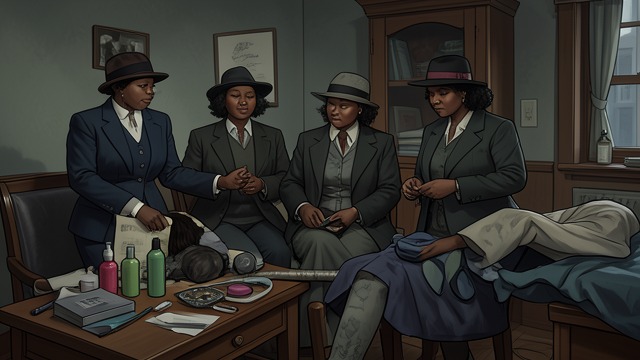
The Hair-Party Circle
Belonging within reach
At Hazel’s gathering, Nella sees Black women sharing hair care, stories, and professional ambitions. The scene evokes the family practices and physical intimacy that shaped her own relationship to hair.
Suspicion interrupts belonging
Nella participates in the gathering while secretly searching Hazel’s room. Her need for evidence prevents her from being wholly present in a space she might otherwise value.
The scene makes belonging feel both nourishing and vulnerable to manipulation.
The One-per-Office Rule

The One-per-Office Rule
A scarcity made explicit
Hazel tells Nella that only one transformed woman is placed in each office to maximize the scheme’s effect. The rule gives a sinister explanation to Nella’s sense that she and Hazel were being positioned against each other.
Solidarity redefined
The women’s conflict is not simply personal jealousy; it is produced by a system that rewards one woman’s advancement through another’s replacement. Nella must decide whether she can resist without accepting the system’s definition of her worth.
The revelation makes the title’s question of who belongs at work inseparable from power and consent.
July 23, 2018
August 21, 2018
September 2018
October 25, 2018
October 26, 2018
